Facade Archives - DORTEC

Facade

01. Point Fixed Glazing

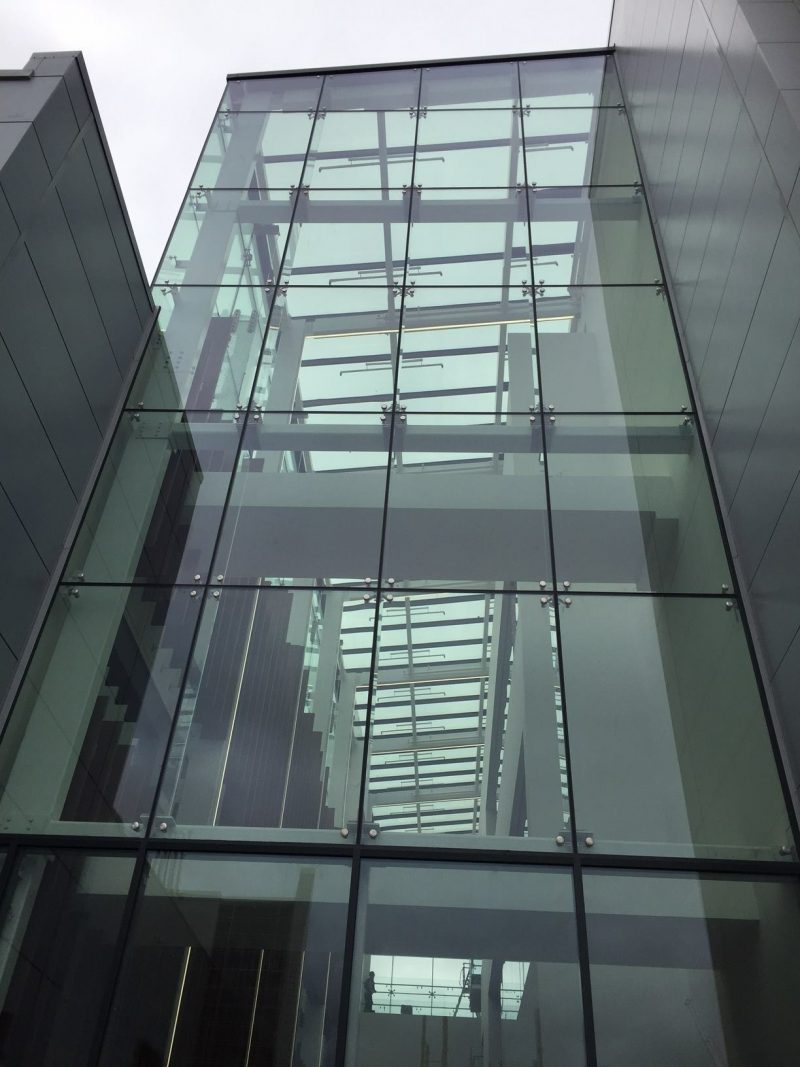
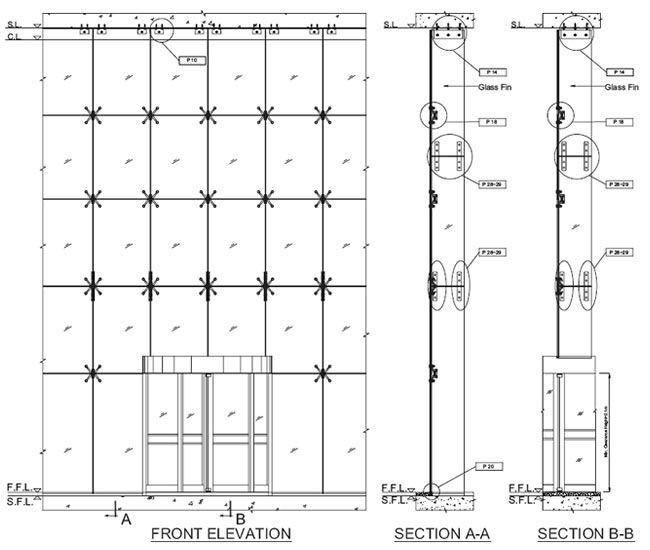
Point Fixed Glazing (PFG), commonly referred to as Spider Glazing, is a high-performance architectural system designed to create maximum transparency in building facades, canopies, and atriums. Unlike traditional curtain walls that rely on continuous aluminum frames (mullions and transoms) to hold glass edges, PFG uses discrete metal fittings to support the glass at specific points.

Core Concept
  • The fundamental principle of point fixed glazing is the removal of bulky perimeter framing. The loads (wind pressure and glass weight) are transferred through specialized stainless steel components to a secondary support structure. This results in a “seamless” glass skin that maximizes natural light and offers unobstructed views.
Key Components
  • A typical point fixed system consists of four primary elements:
  • Glass Panels
    Usually tempered or laminated safety glass. Panels are pre-drilled with high-precision holes to accommodate the fixings.
  • Spider Fittings
    Multi-armed (1, 2, 3, or 4-way) stainless steel brackets that connect the glass corners to the support structure.
  • Routels / Bolts
    Articulated or “swivel” bolts that pass through the glass holes. The swivel head allows the glass to flex under wind load, preventing stress concentration.
  • Support Structure
    The skeleton that holds the spiders. This can be steel tubes, glass fins, tension cables, or steel trusses.
  • Weather Seal
    Non-structural silicone sealant applied in the joints between glass panes to ensure the system is water and airtight.
View Product Information
Types of Support Structures
  • The visual impact of the system depends heavily on the chosen support:
  • Steel Support: The spiders are bolted to a visible steel frame or pipe.
  • Glass Fin System: Vertically placed glass “fins” act as the structural support, providing the highest level of transparency (all-glass look).
  • Tension Cable/Rod System: A lightweight web of high-strength cables holds the spiders, giving the facade a “floating” appearance.
Technical Advantages
  • Maximum Transparency: Eliminates nearly all vertical and horizontal framing members.
  • Flexibility: The articulated routels allow the glass to move slightly in response to building sway, thermal expansion, or wind, reducing the risk of breakage.
  • Customization: Designers can create complex 3D shapes, curves, and sloped roofs that would be difficult with standard framing.
  • Durability: High-grade stainless steel (typically Grade 316) is used to prevent corrosion, making it ideal for high-end commercial entries.

02. Capped Curtain Wall

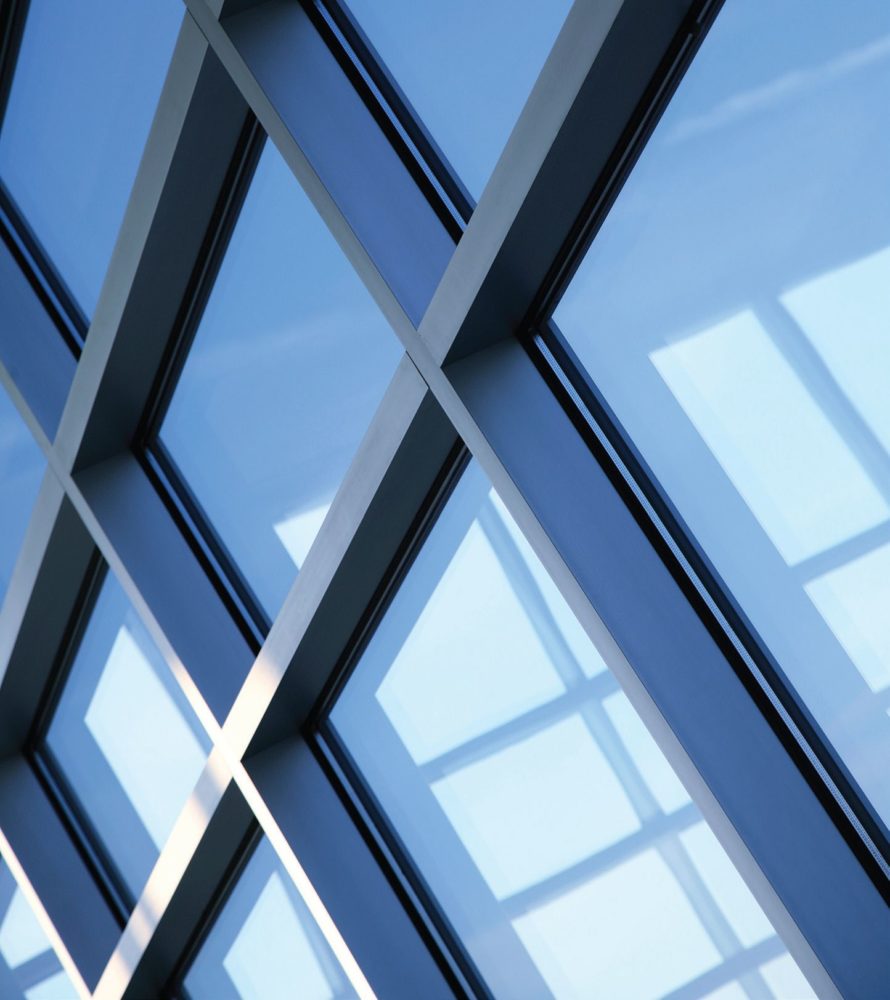
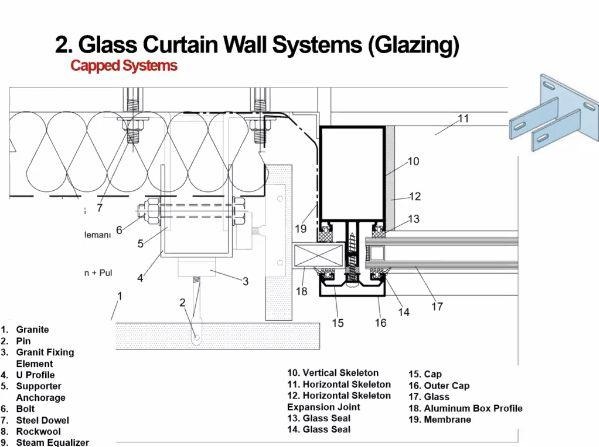
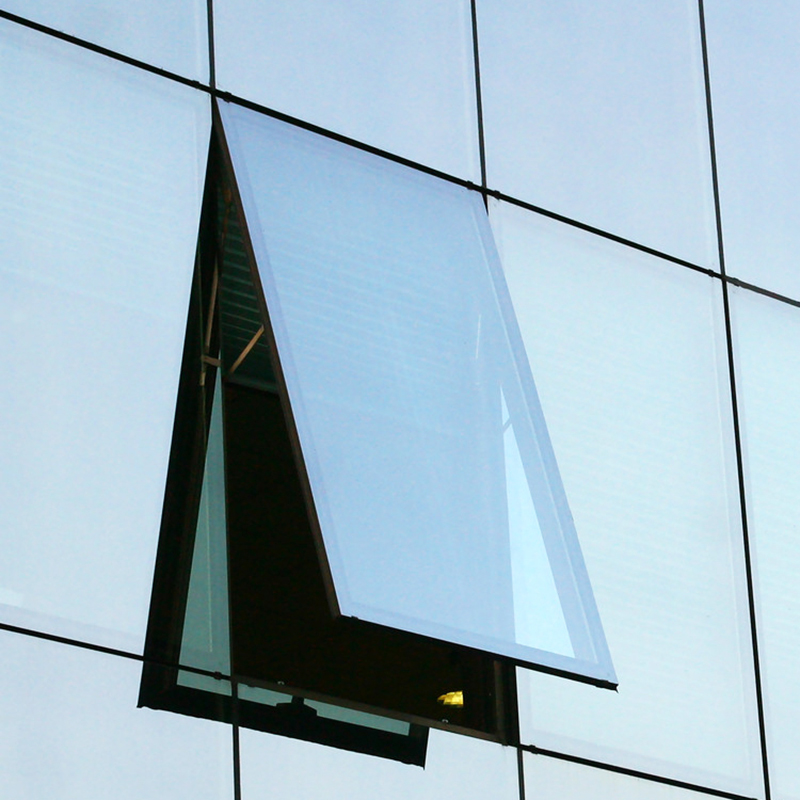
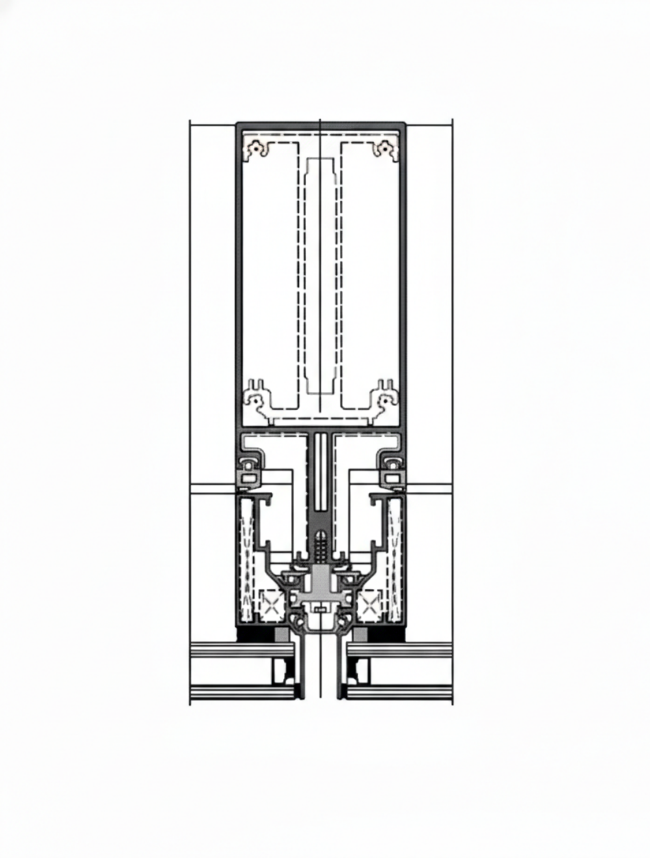
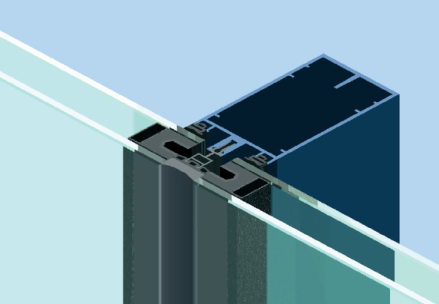
A Capped Curtain Wall System (also known as a “Captured” or “Stick” system) is the most common architectural method for creating a building’s glass envelope. Unlike structural silicone glazing where the frame is hidden, the capped system uses a visible aluminum grid on the exterior to hold the glass panels in place.

The Core Mechanism
  • The system works through a “sandwich” clamping method:
  • The Grid: Vertical mullions and horizontal transoms form the internal load-bearing skeleton.
  • The Clamp: After the glass is placed against the grid, a pressure plate is screwed into the mullions and transoms from the outside.
  • The Finish: A decorative cover cap (the “face cap”) is snapped onto the pressure plate to hide the fasteners and provide a clean finish.
View Product Information
Standard Components
  • Mullions & Transoms
    The main vertical and horizontal aluminum profiles.
  • Thermal Break (at an additional cost)
    A plastic or polyamide strip that prevents heat/cold from transferring between the exterior and interior metal.
  • Gaskets
    Rubber (EPDM) strips on both sides of the glass that provide a water and airtight seal.
  • Pressure Plate
    The mechanical bar that applies uniform pressure to hold the glass.
  • Face Cap
    The visible exterior trim, available in different shapes (flat, bullnose, or aero).
Key Advantages
  • Extreme Durability: The mechanical clamping is highly reliable in extreme wind zones and high-velocity wind environments.
  • Ease of Maintenance: If a glass pane breaks, it can be replaced by simply popping off the cap and unscrewing the pressure plate. In structural systems, you often have to cut out cured silicone.
  • Versatile Aesthetics: Architects can use caps to emphasize specific lines. For example, a “Vertical Feature” system uses caps on the mullions but leaves the transoms flush-jointed.
  • Cost-Effectiveness: It is generally more economical than unitized or semi-unitized systems due to simpler fabrication.

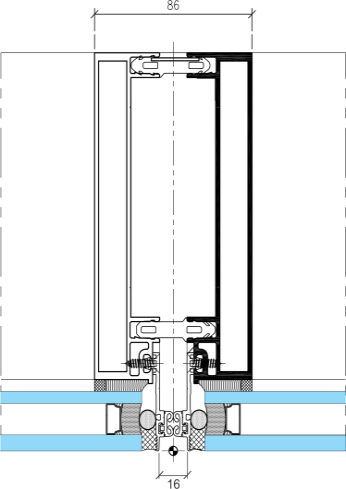
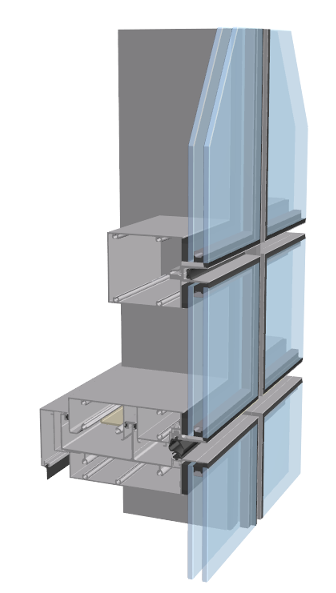
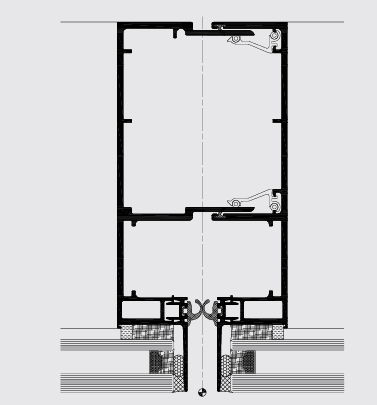
03. Semi-Unitized Glazing

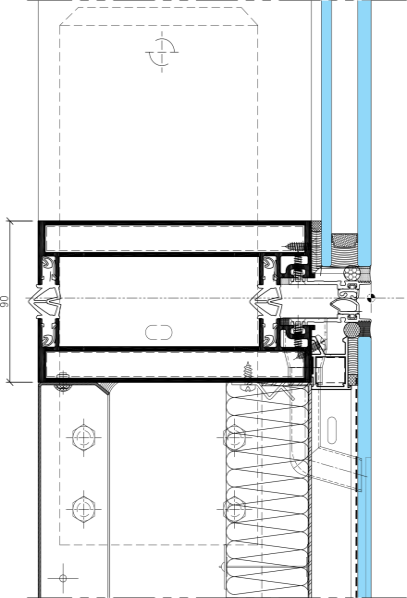
A Semi-Unitized Glazing System with Subframe and Toggle is a sophisticated architectural solution used for high-performance building envelopes. It combines the aesthetic of a seamless “all-glass” facade with the structural reliability of mechanical fastening.

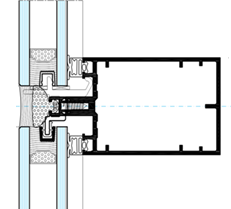
In this system, the glass is not just glued to the building; it is bonded to an intermediate aluminum frame (the subframe) in a factory, which is then mechanically locked into the main building grid using specialized clips called toggles.

Structural Components
  • The system is built using a “layering” approach:
  • Main Grid (Mullions & Transoms): Installed first on the building site. These are the primary load-bearing aluminum profiles.
  • Glass Subframe: A secondary, smaller aluminum frame that is factory-glued to the glass using structural silicone.
  • The Toggle: A small, heavy-duty mechanical fastener (often a rotating block or a U-bracket) that fits into a groove in the subframe and “toggles” or bolts into the main mullion.
  • U-Channel: Most glass panels in this system have a recessed U-channel between the two panes of glass (in double glazing) where the toggle sits.
View Product Information
Key Advantages
  • Mechanical Safety
    Even if the structural silicone fails, the toggle provides a mechanical “backup” that prevents the glass from falling.
  • Flush Aesthetic
    There are no bulky exterior caps. From the outside, you see a clean, flat glass surface with only thin silicone joints.
  • Thermal Break
    The subframe allows for better separation between the exterior glass and the interior metal grid, improving insulation.
  • Movement
    The system is excellent at handling building sway and thermal expansion because each glass “unit” is semi-independent.

04. Transom less Glazing

Transom less Glazing (also known as “Vertical-Only” or “Ribbon” glazing) is a design approach that eliminates horizontal aluminum members (transoms) from the curtain wall grid. This results in uninterrupted vertical lines of glass, creating the illusion of a much taller, sleeker building.

How the System Works
  • In a standard curtain wall, the glass is supported on all four sides by a “box” of aluminum (mullions on the sides, transoms at the top and bottom). In a transom less system:
  • Vertical Support: The glass is held primarily by vertical mullions.
  • Horizontal Joints: The horizontal gap between two glass panels is typically a
  • butt-joint. This joint is filled only with structural silicone or a specialized weather-sealant, rather than a metal bar.
  • Weight Transfer: Since there is no horizontal bar to sit on, the dead load of the glass is transferred to the vertical mullions via specialized “setting blocks” or internal “toggles” hidden within the vertical frame.
View Product Information
Key Components
  • Heavy-Duty Mullion
    Since the transoms are missing, the vertical mullions must handle all wind loads and glass weight.
  • Structural Silicone
    Bonds the horizontal edges of the glass panels together to ensure water-tightness.
  • Setting Blocks
    Small supports hidden at the base of the glass that transfer weight to the mullion.
  • Glass Fins (Optional)
    In very high-end transom less systems, the vertical mullion is replaced by a glass strip for 100% transparency.
Benefits of Transom less Design
  • Enhanced Aesthetics: It creates a “waterfall” effect where the glass appears to flow from the roof to the ground without horizontal breaks.
  • Increased Natural Light: Removing the horizontal metal bars reduces shadows inside the building and maximizes the “vision area.”
  • Lower External Maintenance: Horizontal transoms often act as “dust shelves” where dirt and bird droppings collect. Transom less systems stay cleaner as rain washes straight down the glass.
  • Architectural “Stretch”: It is a favorite for designers who want to emphasize the verticality of a skyscraper or a double-height lobby.

05. Unitized Glazing

Pre-assembled facade units for rapid, high-quality installation and superior performance, ideal for high-rise buildings.

Key Benefits of Unitized Glazing
  • The shift from traditional “stick-built” systems to unitized systems offers several strategic advantages:
  • Speed of Installation: Since panels are pre-fabricated, they can be installed as soon as the building’s structural frame is ready. On-site installation is often 30% to 50% faster than traditional methods.
  • Superior Quality Control: Assembly occurs in a controlled factory environment. This minimizes the risk of seal failure, glass contamination, and human error common in outdoor, high-altitude installations.
  • Independent of Weather: Because the units are sealed in a factory, “dry” installation on-site can continue in various weather conditions, preventing delays.
  • Movement & Seismic Tolerance: The interlocking joints are designed to absorb floor-to-floor glass deflection and seismic movements, making it ideal for tall buildings in active zones.
  • Performance: These systems generally offer better air and water infiltration resistance due to factory-installed gaskets and pressure-equalized rainscreen principles.
Technical Joinery: Male-Female vs. Female-Female
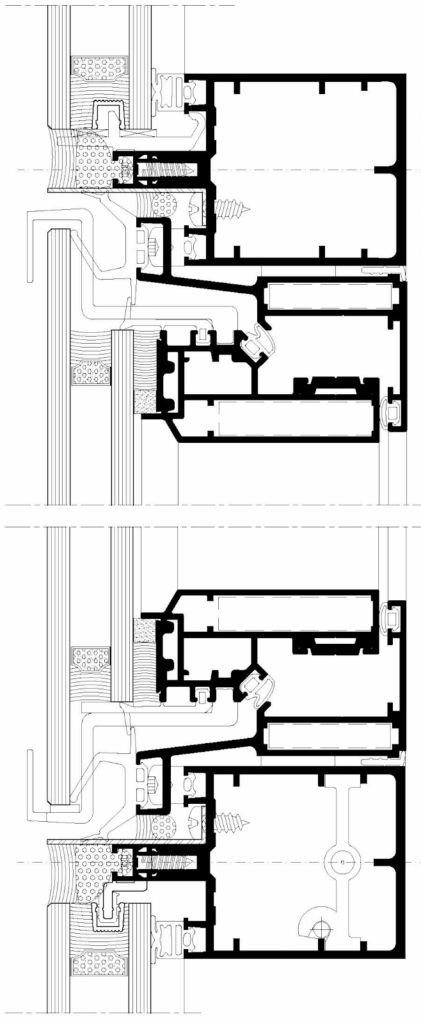
  • The “joint” refers to the vertical or horizontal interface where two unitized panels meet. These are designed to interlock to create a weather-tight seal.
View Product Information
A. Male-Female (M-F) Joints
  • This is the most common industry standard. One side of the vertical mullion has a “male” profile (a protruding tongue), and the adjacent panel has a “female” profile (a receiving pocket).
  • How it works: Panels are typically installed in a sequential order (e.g., left to right). The male mullion of the new panel slides into the female mullion of the previously installed panel.
  • Benefit: Provides a very clear “stacking” logic and excellent structural engagement.
Male-Female (Standard) Feature
  • Primary Seal
    Interlocking gaskets (EPDM/Silicone)
  • Installation
    Sequential (one-way)
  • Water Management
    Internal gutter within the “male” head
B. Female-Female (F-F) Joints
  • In this configuration, both vertical mullions of a unit have a “female” (pocketed) profile. A separate “Spline” or “Joint Insert” (acting as a double-male) is used to bridge the gap between them.
  • How it works: This is often used for “closer” panels or complex geometries where a sequential left-to-right installation isn’t possible. The spline is inserted into one side, and the next panel is slid over it.
  • Benefit: Allows for more flexibility in the installation sequence (you can drop a panel into a gap between two existing ones).
Female-Female (Spline System) Feature
  • Primary Seal
    Central spline with dual gaskets
  • Installation
    Non-sequential (flexible)
  • Water Management
    Gutter system integrated into the transom