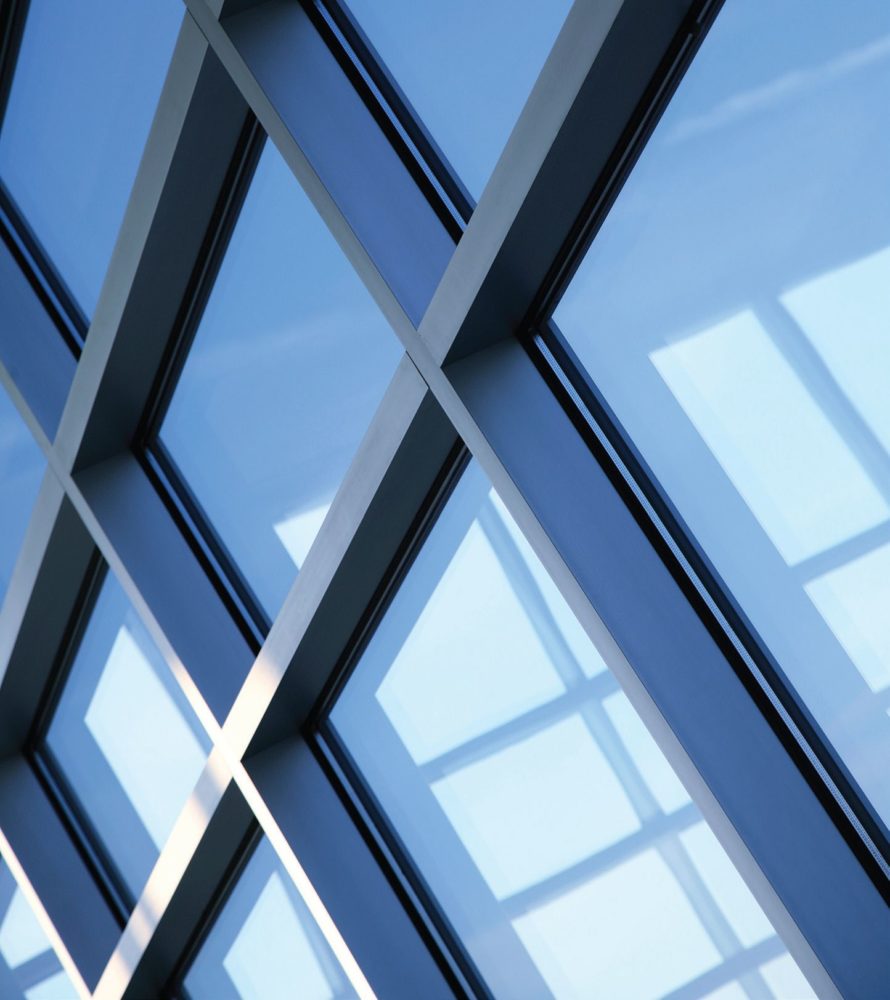
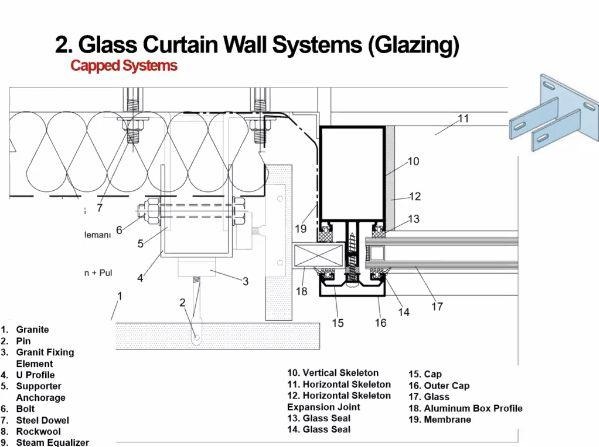
A Capped Curtain Wall System (also known as a “Captured” or “Stick” system) is the most common architectural method for creating a building’s glass envelope. Unlike structural silicone glazing where the frame is hidden, the capped system uses a visible aluminum grid on the exterior to hold the glass panels in place.
The Core Mechanism
- The system works through a “sandwich” clamping method:
- The Grid: Vertical mullions and horizontal transoms form the internal load-bearing skeleton.
- The Clamp: After the glass is placed against the grid, a pressure plate is screwed into the mullions and transoms from the outside.
- The Finish: A decorative cover cap (the “face cap”) is snapped onto the pressure plate to hide the fasteners and provide a clean finish.
Standard Components
- Mullions & Transoms
The main vertical and horizontal aluminum profiles. - Thermal Break (at an additional cost)
A plastic or polyamide strip that prevents heat/cold from transferring between the exterior and interior metal. - Gaskets
Rubber (EPDM) strips on both sides of the glass that provide a water and airtight seal. - Pressure Plate
The mechanical bar that applies uniform pressure to hold the glass. - Face Cap
The visible exterior trim, available in different shapes (flat, bullnose, or aero).
Key Advantages
- Extreme Durability: The mechanical clamping is highly reliable in extreme wind zones and high-velocity wind environments.
- Ease of Maintenance: If a glass pane breaks, it can be replaced by simply popping off the cap and unscrewing the pressure plate. In structural systems, you often have to cut out cured silicone.
- Versatile Aesthetics: Architects can use caps to emphasize specific lines. For example, a “Vertical Feature” system uses caps on the mullions but leaves the transoms flush-jointed.
- Cost-Effectiveness: It is generally more economical than unitized or semi-unitized systems due to simpler fabrication.