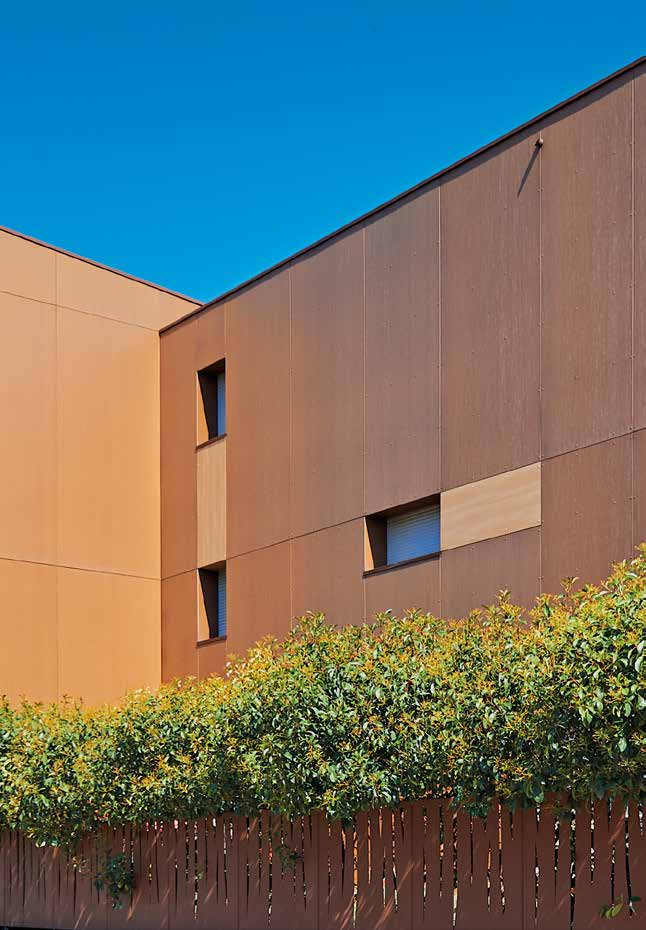
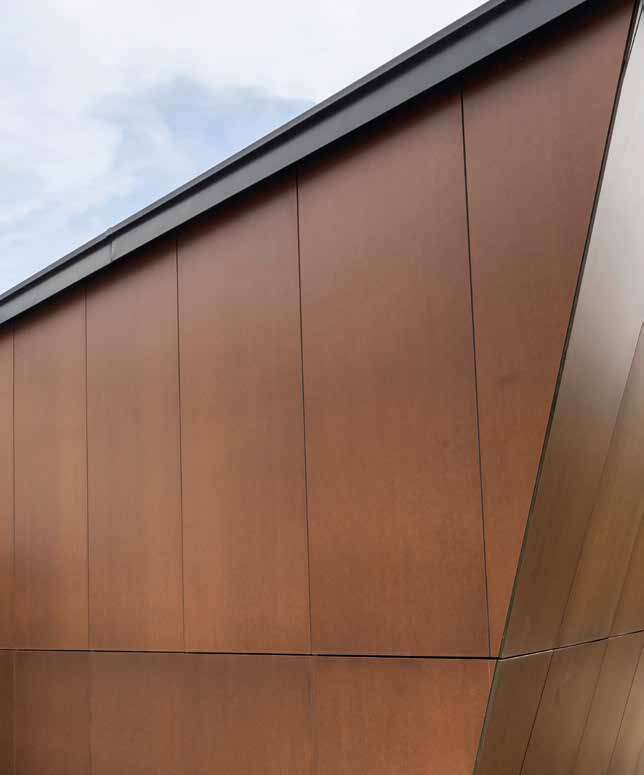
High Pressure Laminates (HPL) are high-performance cladding and surfacing materials created by fusing multiple layers of kraft paper saturated with thermosetting resins under intense heat and pressure. This process, known as polymerization, creates a high-density, non-porous slab that is exceptionally tough and resistant to environmental stress.
The Manufacturing Process
- HPL is constructed through a “sandwich” of materials:
- Decorative Layer: A top layer of printed paper that determines the color, pattern, or texture (wood, stone, or solid colors).
- Overlay: A transparent, high-strength protective coating that resists scratches and UV rays.
- Core Layers: Multiple layers of kraft paper soaked in phenolic resin, which provide the panel’s thickness and impact resistance.
Key Advantages
- Weather & UV Resistance: Exterior-grade HPL is designed to withstand extreme sunlight, rain, and temperature fluctuations without fading or peeling.
- Impact and Scratch Resistance: The high-density composition makes it nearly impossible to dent or scratch, making it ideal for high-traffic areas.
- Anti-Bacterial & Hygienic: Because the surface is non-porous, it does not support the growth of mold or bacteria and is very easy to disinfect.
- Aesthetic Variety: HPL can perfectly mimic natural materials like oak, walnut, or marble while offering better durability than the real materials.
Common Applications
- HPL is divided into Interior and Exterior grades based on its intended use:
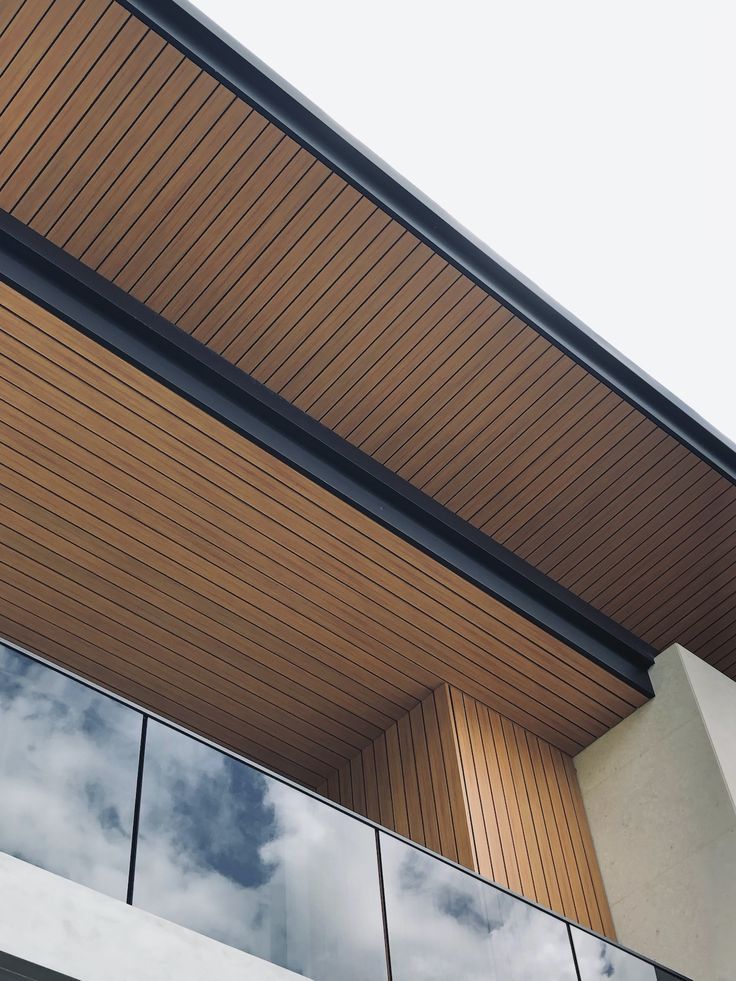
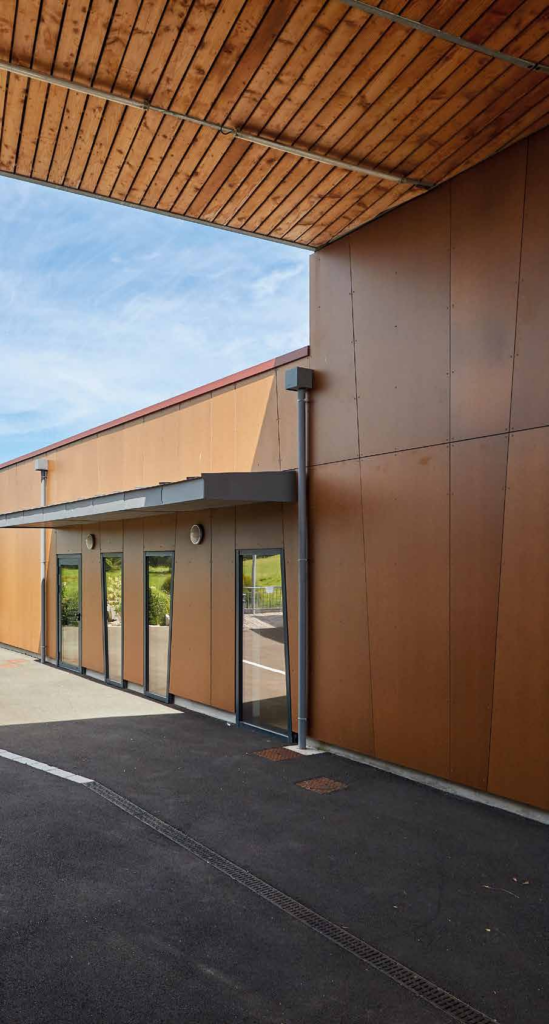
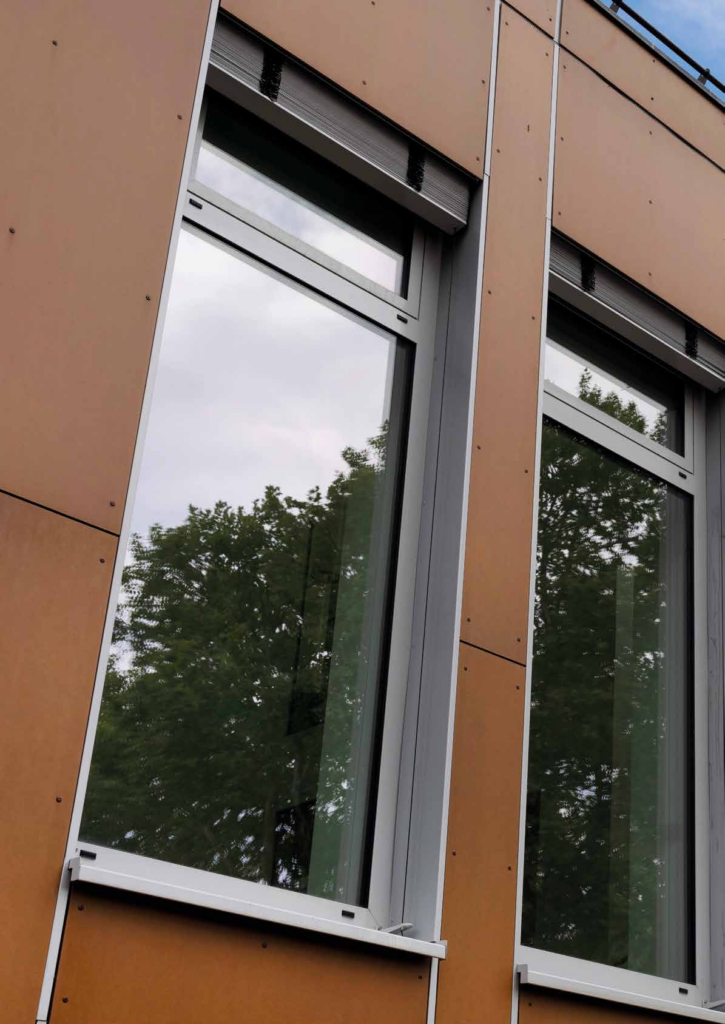
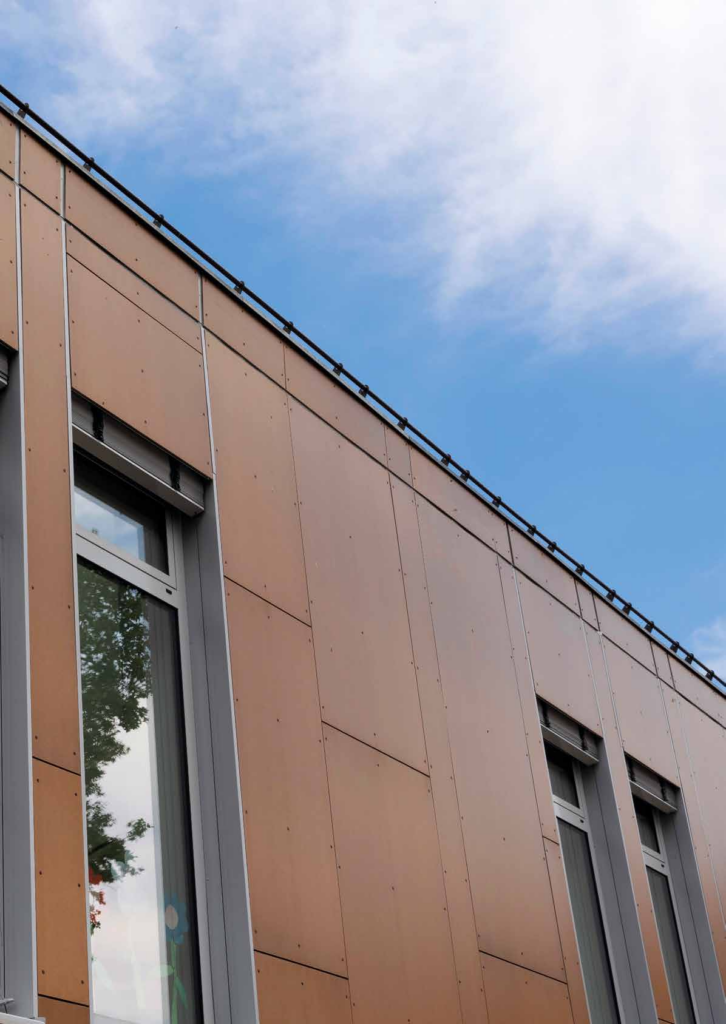
- Building Facades
Exterior wall cladding, balconies, and gate elevation. - Furniture
Kitchen cabinets, tabletops, and office workstations. - Public Spaces
Restroom cubicles, lockers, and wall panels in hospitals or malls. - Outdoor Elements
Fencing, pergolas, and signage.