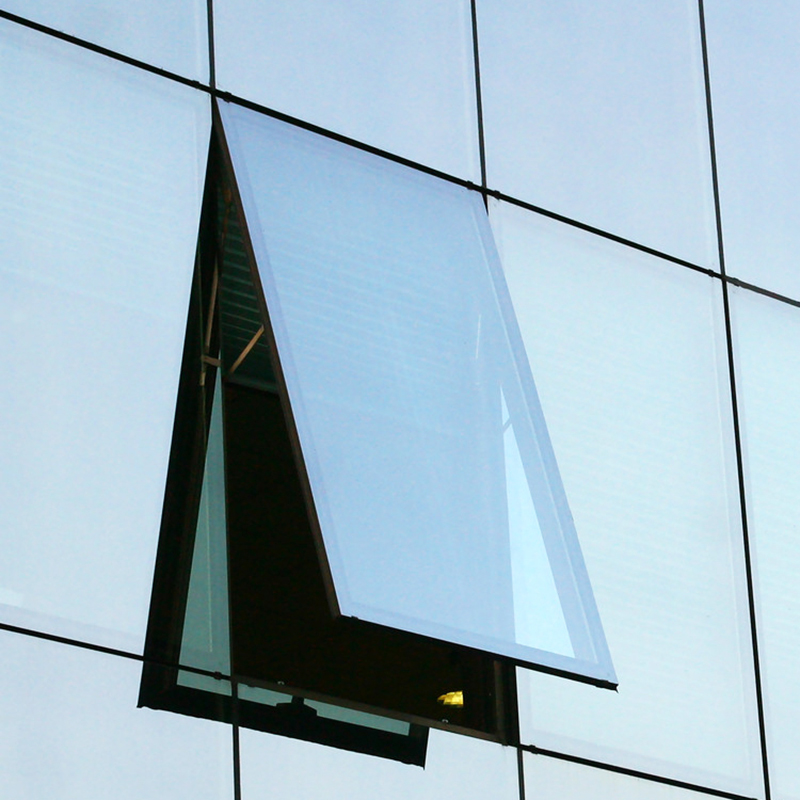
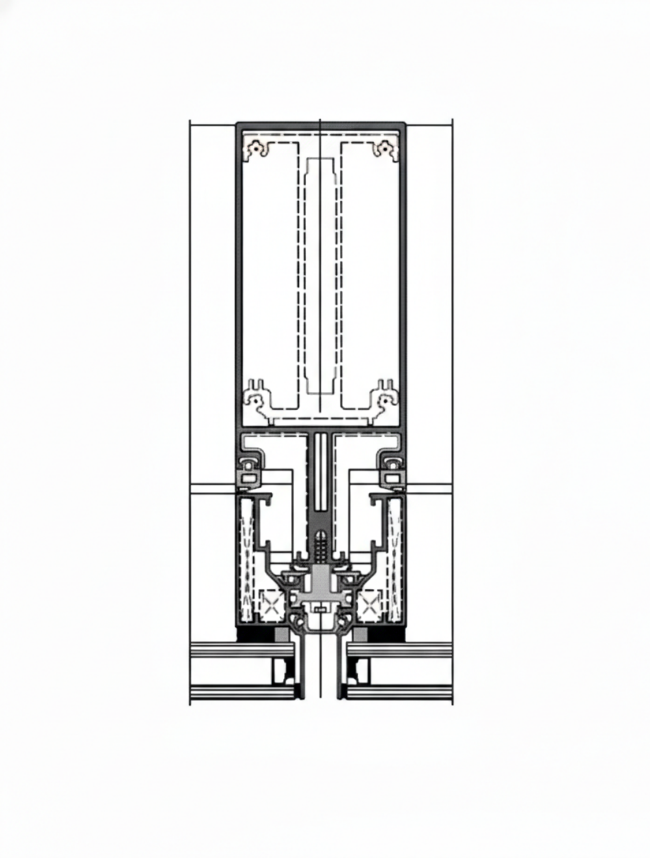
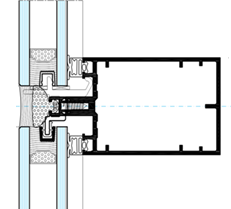
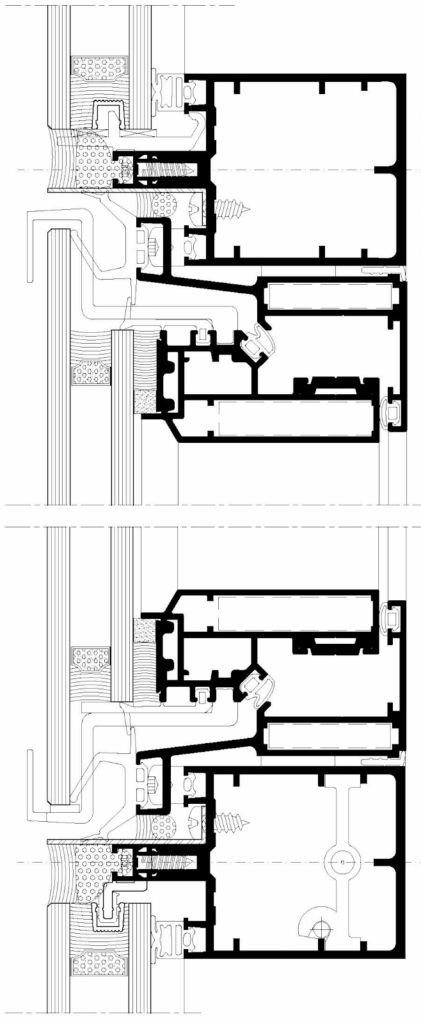
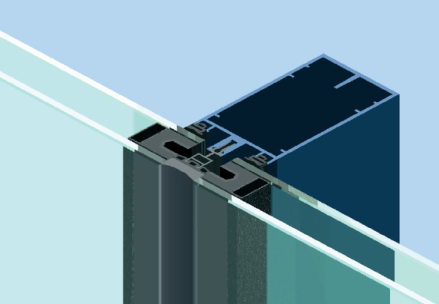
A Semi-Unitized Glazing System with Subframe and Toggle is a sophisticated architectural solution used for high-performance building envelopes. It combines the aesthetic of a seamless “all-glass” facade with the structural reliability of mechanical fastening.
In this system, the glass is not just glued to the building; it is bonded to an intermediate aluminum frame (the subframe) in a factory, which is then mechanically locked into the main building grid using specialized clips called toggles.
Structural Components
- The system is built using a “layering” approach:
- Main Grid (Mullions & Transoms): Installed first on the building site. These are the primary load-bearing aluminum profiles.
- Glass Subframe: A secondary, smaller aluminum frame that is factory-glued to the glass using structural silicone.
- The Toggle: A small, heavy-duty mechanical fastener (often a rotating block or a U-bracket) that fits into a groove in the subframe and “toggles” or bolts into the main mullion.
- U-Channel: Most glass panels in this system have a recessed U-channel between the two panes of glass (in double glazing) where the toggle sits.
Key Advantages
- Mechanical Safety
Even if the structural silicone fails, the toggle provides a mechanical “backup” that prevents the glass from falling. - Flush Aesthetic
There are no bulky exterior caps. From the outside, you see a clean, flat glass surface with only thin silicone joints. - Thermal Break
The subframe allows for better separation between the exterior glass and the interior metal grid, improving insulation. - Movement
The system is excellent at handling building sway and thermal expansion because each glass “unit” is semi-independent.