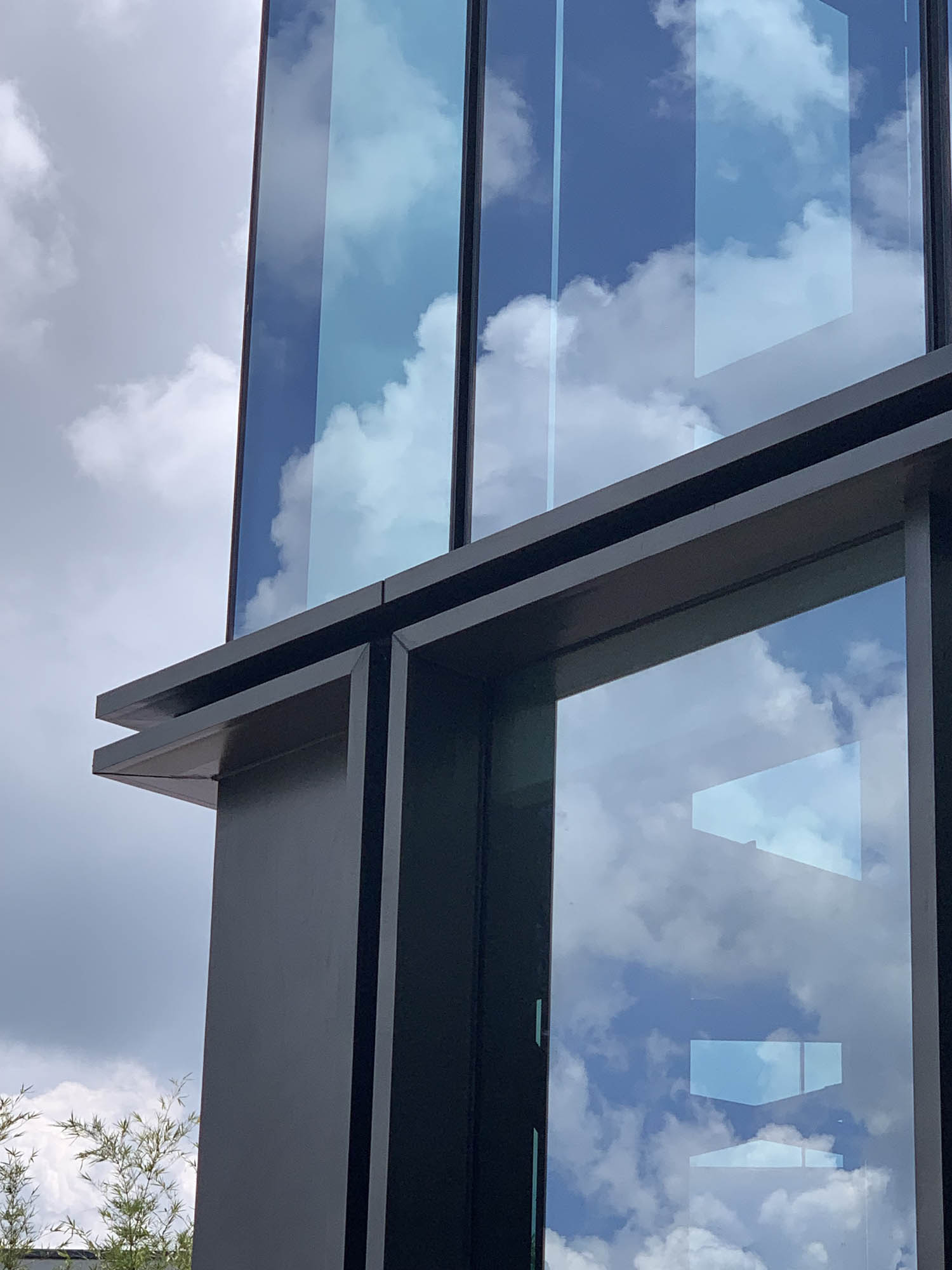
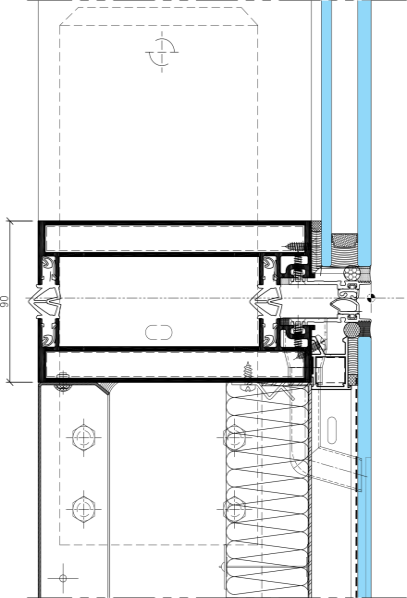
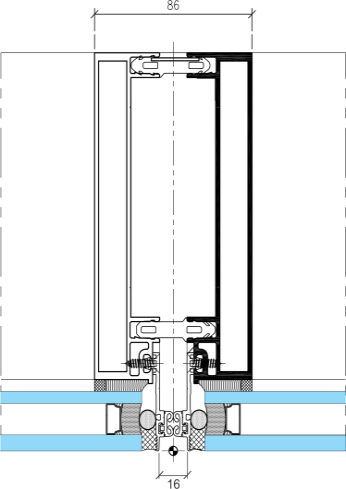
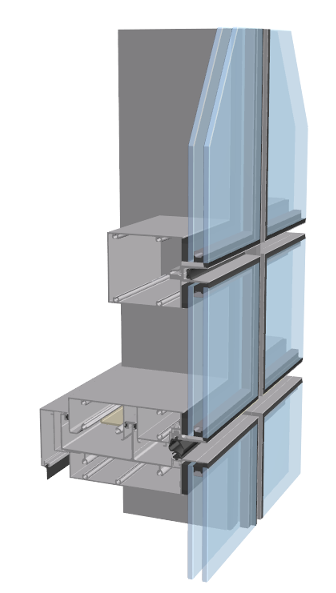
Pre-assembled facade units for rapid, high-quality installation and superior performance, ideal for high-rise buildings.
Key Benefits of Unitized Glazing
- The shift from traditional “stick-built” systems to unitized systems offers several strategic advantages:
- Speed of Installation: Since panels are pre-fabricated, they can be installed as soon as the building’s structural frame is ready. On-site installation is often 30% to 50% faster than traditional methods.
- Superior Quality Control: Assembly occurs in a controlled factory environment. This minimizes the risk of seal failure, glass contamination, and human error common in outdoor, high-altitude installations.
- Independent of Weather: Because the units are sealed in a factory, “dry” installation on-site can continue in various weather conditions, preventing delays.
- Movement & Seismic Tolerance: The interlocking joints are designed to absorb floor-to-floor glass deflection and seismic movements, making it ideal for tall buildings in active zones.
- Performance: These systems generally offer better air and water infiltration resistance due to factory-installed gaskets and pressure-equalized rainscreen principles.
Technical Joinery: Male-Female vs. Female-Female
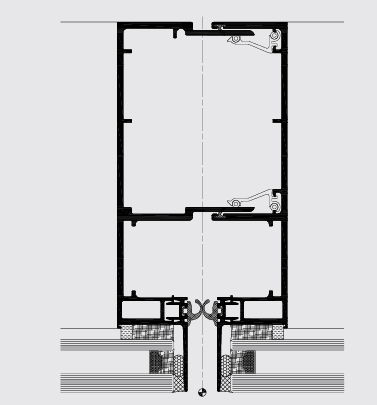
- The “joint” refers to the vertical or horizontal interface where two unitized panels meet. These are designed to interlock to create a weather-tight seal.
A. Male-Female (M-F) Joints
- This is the most common industry standard. One side of the vertical mullion has a “male” profile (a protruding tongue), and the adjacent panel has a “female” profile (a receiving pocket).
- How it works: Panels are typically installed in a sequential order (e.g., left to right). The male mullion of the new panel slides into the female mullion of the previously installed panel.
- Benefit: Provides a very clear “stacking” logic and excellent structural engagement.
Male-Female (Standard) Feature
- Primary Seal
Interlocking gaskets (EPDM/Silicone) - Installation
Sequential (one-way) - Water Management
Internal gutter within the “male” head
B. Female-Female (F-F) Joints
- In this configuration, both vertical mullions of a unit have a “female” (pocketed) profile. A separate “Spline” or “Joint Insert” (acting as a double-male) is used to bridge the gap between them.
- How it works: This is often used for “closer” panels or complex geometries where a sequential left-to-right installation isn’t possible. The spline is inserted into one side, and the next panel is slid over it.
- Benefit: Allows for more flexibility in the installation sequence (you can drop a panel into a gap between two existing ones).
Female-Female (Spline System) Feature
- Primary Seal
Central spline with dual gaskets - Installation
Non-sequential (flexible) - Water Management
Gutter system integrated into the transom