Room-by-Room Window Selection Guide for Your Villa
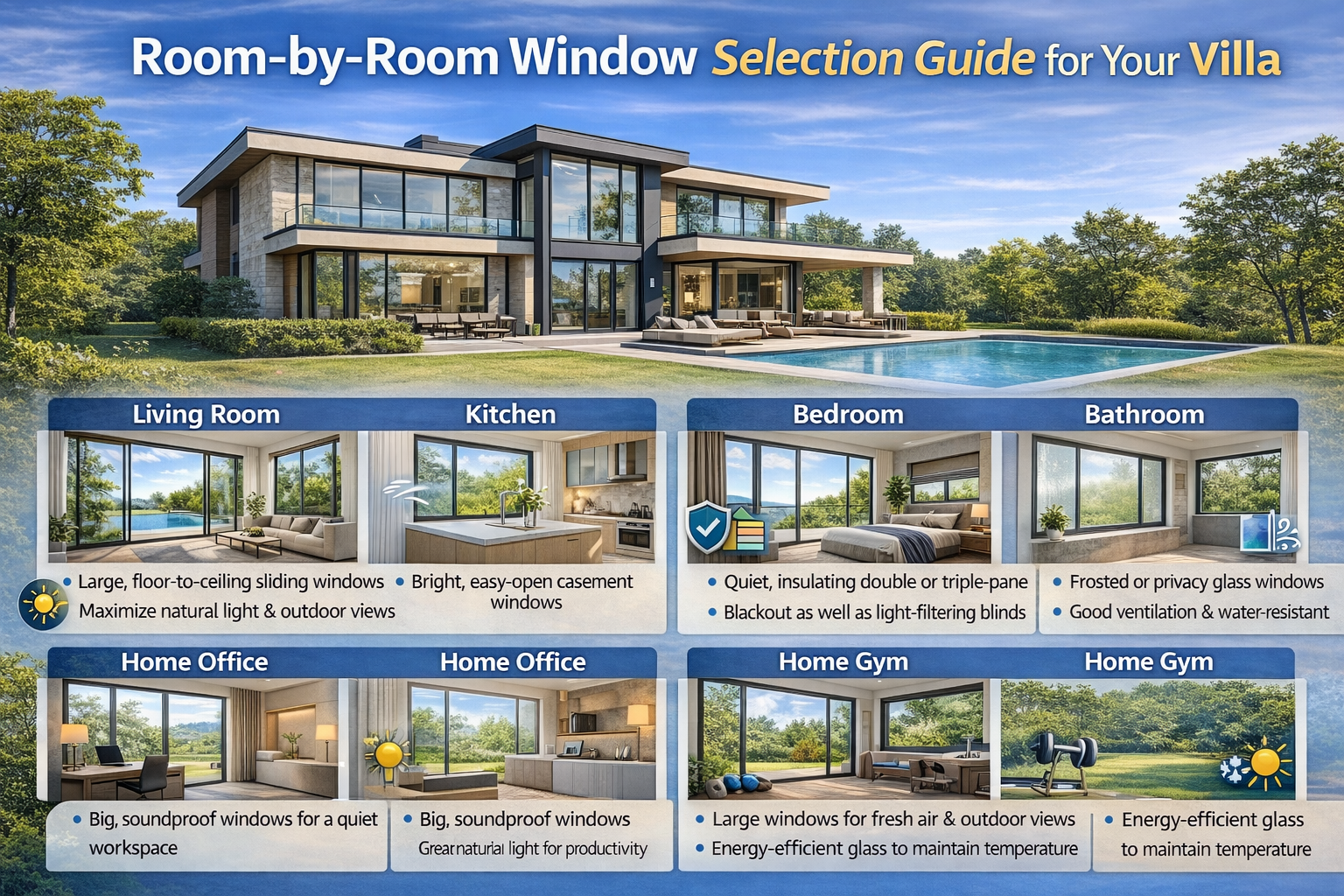
Planning Windows? Room-by-Room Strategy Matters
You’ve finalized your villa floor plan in Bhubaneswar, Ranchi, or Nagpur. Now comes window planning—and this is where many homeowners make costly mistakes by treating all windows equally.
The reality? Different rooms have different priorities. Your master bedroom needs quiet and climate control. Your kitchen needs easy operation and ventilation. Your living room needs abundant light and aesthetic appeal. One-size-fits-all approach wastes money and delivers poor results.
This comprehensive guide walks through every room type in a typical 2,000-2,500 sq ft independent villa, providing specific recommendations on window type, size, features, and investment for each space.
Master Bedroom: Your Sanctuary Deserves the Best
Room Size: Typically 12×14 ft (200-250 sq ft) Window Priority: Sleep quality, climate control, security, privacy
Recommended Window Configuration:
Primary Window: 6×5 ft (30 sq ft)
- Type: Thermal break casement (double panel)
- Glass: Acoustic laminated double glazing if facing road, regular double glazing otherwise
- Features: Multi-point locking (5+ points), EPDM gaskets, concealed hinges
- Operation: Inward opening to avoid exterior grill interference
- Position: 3 ft from floor for optimal ventilation and light
Secondary Window: 4×3 ft (12 sq ft) – Optional for cross ventilation
- Type: Sliding or casement based on wall orientation
- Glass: Double glazing minimum
- Purpose: Cross ventilation for natural cooling
Total Window Investment: ₹45,000-65,000
Why These Specifications:
- Thermal break reduces AC costs by 35-40%
- Acoustic glass ensures undisturbed sleep (critical if room faces road)
- Casement provides superior air tightness for AC efficiency
- Multi-point locking enhances security (ground floor concern)
- Double glazing prevents condensation damage to walls
Additional Considerations:
- Blackout curtains or roller blinds for complete darkness
- Mesh for insect-free ventilation during pleasant weather
- Ensure window placement doesn’t interfere with bed position
Children’s Bedrooms: Growing with Your Family
Room Size: Typically 10×12 ft (150-180 sq ft each) Window Priority: Study environment, safety, natural light, ventilation
Recommended Configuration:
Standard Window: 5×4 ft (20 sq ft)
- Type: Casement for study rooms (quieter), sliding for younger children (safer operation)
- Glass: Double glazing, consider laminated glass for ground floor (safety)
- Features: Multi-point locking, child-safe opening restrictors for upper floors
- Position: 3-3.5 ft from floor
Investment Per Room: ₹25,000-38,000
Age-Appropriate Considerations:
For Young Children (Below 10 years):
- Sliding windows (no slam risk)
- Safety glass (laminated) for ground floor
- Window grills if required by local regulations
- Easy-to-clean considering handprints
For Teenagers (Study-Focused):
- Casement for better acoustic isolation
- Adequate natural light for study desk
- Blackout option for afternoon naps/sleep
- Cross ventilation for fresh air during study hours
Pro Tip: Position window to allow study desk near it for natural daylight, reducing eye strain and electricity costs during daytime study.
Living Room: Heart of Your Home
Room Size: Typically 16×20 ft (350-400 sq ft) Window Priority: Natural light, views, aesthetic appeal, ventilation
Recommended Configuration:
Feature Wall Windows: 12-15 ft wide × 5-6 ft high
- Type: Combination of fixed center panels (60%) + sliding or casement sides (40%)
- Glass: Clear single glazing for fixed panels, thermal break sliding/casement for operable sections
- Purpose: Maximum light and views, adequate ventilation, cost optimization
Alternative Configuration: Multiple window sets
- Two 6×5 ft windows if single large opening not feasible
- Maintain symmetry for aesthetic balance
Investment: ₹70,000-1,20,000 depending on configuration
Design Considerations:
Orientation Matters:
- South/West facing: Consider tinted or reflective glass to reduce heat gain
- North facing: Clear glass for maximum light
- East facing: Ideal for morning light, standard specifications sufficient
Aesthetic Integration:
- Coordinate frame color with interior design theme
- Consider floor-to-ceiling options for modern contemporary look
- Ensure curtain mounting space in frame design
Ventilation Strategy: Even with large windows, ensure adequate opening area (minimum 30-40 sq ft operable) for natural ventilation during pleasant weather.
Dining Room: Connected Living Space
Room Size: 10×12 ft (120-150 sq ft) or combined with living Window Priority: Natural light, aesthetic coordination with living area
Recommended Configuration:
Standard Window: 5×5 ft (25 sq ft) or 6×4 ft (24 sq ft)
- Type: Sliding or casement matching living room style
- Glass: Single or double glazing based on orientation and budget
- Features: Standard thermal break profiles
Investment: ₹28,000-42,000
Key Considerations:
- Coordinate with living room for visual continuity
- Position considering dining table placement
- Morning light preferred for breakfast area
- Can use standard specifications to optimize budget if not directly road-facing
Kitchen: Functional Priority
Room Size: 8×10 ft to 10×12 ft (100-150 sq ft) Window Priority: Ventilation, easy operation, moisture resistance, natural light
Recommended Configuration:
Primary Window: 4×3 ft (12 sq ft) above platform
- Type: Sliding (easiest operation while cooking)
- Glass: Clear single glazing (heat and grease exposure makes double glazing less practical)
- Features: Easy-clean profiles, good quality powder coating
- Height: 4.5-5 ft from floor (above platform)
Investment: ₹12,000-18,000
Kitchen-Specific Requirements:
Grease Resistance:
- Quality powder coating thickness (60-80 microns minimum)
- Smooth profiles without sharp corners (easier cleaning)
- Removable mesh for regular washing
Ventilation:
- Window placement near cooking range ideal
- Adequate opening area for cross ventilation
- Consider exhaust chimney placement (doesn’t block window)
Moisture Management:
- Corrosion-resistant hardware
- Good drainage in frame (water splashing from sink area)
Pro Tip: Don’t compromise on kitchen window quality to save money. Poor windows here affect daily convenience significantly.
Bathrooms: Privacy and Ventilation
Room Size: 40-80 sq ft depending on master/common bathroom Window Priority: Privacy, ventilation, moisture resistance, natural light
Recommended Configuration:
Standard Bathroom Window: 2×2 ft or 3×2 ft (4-6 sq ft)
- Type: Fixed or top-hung casement
- Glass: Frosted/obscure for privacy
- Position: 6-7 ft from floor for privacy
- Features: Corrosion-resistant coating essential
Investment: ₹6,000-10,000 per bathroom
Bathroom-Specific Considerations:
Ventilation Priority:
- Minimum 4 sq ft window area required
- Top-hung casement allows ventilation while maintaining privacy
- Position to create natural air flow with door
Moisture Protection:
- Premium powder coating or anodized finish
- Stainless steel hardware
- Ensure proper drainage in frame
Privacy Solutions:
- Frosted glass standard
- Textured/patterned glass for aesthetic appeal
- Window position above eyeline from outside
Master Bathroom Enhancement:
- Consider slightly larger window (3×3 ft) for luxury feel
- Can use clear glass if completely private exterior (inner courtyard)
- Premium finishes coordinate with overall bathroom aesthetics
Home Office: Productivity Space
Room Size: 10×10 ft to 12×12 ft (120-150 sq ft) Window Priority: Natural light, acoustic isolation, temperature control, no glare on screens
Recommended Configuration:
Office Window: 5×4 ft (20 sq ft)
- Type: Casement for acoustic priority
- Glass: Acoustic double glazing if facing busy area, regular double glazing otherwise
- Features: Thermal break for AC efficiency, adjustable opening for controlled ventilation
- Position: Perpendicular to computer screen (avoid glare)
Investment: ₹25,000-40,000
Work-From-Home Considerations:
Video Call Background:
- Window position creates natural backlight (looks professional on video)
- Option for curtains/blinds to control lighting during calls
Acoustic Priority:
- Critical if regular meetings/calls
- Acoustic laminated glass investment worthwhile
- Casement type for better sound isolation
Climate Control:
- AC typically running during work hours
- Thermal break justifies investment through reduced electricity
- Controlled ventilation for fresh air without temperature disruption
Pooja Room: Sacred Space
Room Size: 6×8 ft to 8×10 ft (60-100 sq ft) Window Priority: Natural light (especially morning), traditional aesthetics, peace
Recommended Configuration:
Pooja Room Window: 2.5×3 ft to 3×3 ft (7.5-9 sq ft)
- Type: Fixed or casement
- Glass: Clear for natural light, can consider decorative glass
- Direction: East-facing traditionally preferred
- Features: Can prioritize aesthetics over high-tech features
Investment: ₹8,000-15,000
Traditional Considerations:
- Morning sunlight (east-facing) traditional preference
- Window size adequate for light, not oversized
- Can incorporate traditional design elements in frame
- Quality finish important for this sacred space
Staircase and Common Areas
Purpose: Natural light, aesthetics, ventilation secondary
Recommended Configuration:
Staircase Landing Windows: 3×4 ft to 3×6 ft (12-18 sq ft)
- Type: Fixed windows (cost optimization, minimal maintenance)
- Glass: Clear single glazing
- Purpose: Daylighting, reduces dependence on artificial lighting
Investment: ₹9,000-14,000 per location
Benefits:
- Significant electricity savings (staircase lighting runs many hours)
- Safety enhancement (well-lit stairs)
- Aesthetic appeal
- Cost-effective (fixed windows are 30-40% cheaper)
Guest Bedroom: Occasional Use
Configuration: Similar to children’s bedrooms Budget Optimization: Can use standard quality vs premium since usage is occasional Investment: ₹20,000-30,000
Utility/Store Rooms
Configuration: Small 2×2 ft ventilators Type: Fixed or basic sliding Investment: ₹4,000-7,000 Purpose: Minimum ventilation, prevent musty odors
Complete Villa Window Budget (2,000 Sq Ft Built-Up)
Typical Window Distribution:
- Master bedroom: 42 sq ft – ₹58,000
- Two children’s bedrooms: 40 sq ft – ₹56,000
- Living room: 75 sq ft – ₹90,000
- Dining room: 24 sq ft – ₹33,000
- Kitchen: 12 sq ft – ₹15,000
- Bathrooms (3): 15 sq ft – ₹24,000
- Home office: 20 sq ft – ₹32,000
- Pooja room: 8 sq ft – ₹11,000
- Staircase/common: 25 sq ft – ₹25,000
- Utility: 8 sq ft – ₹10,000
Total Window Area: 269 sq ft Total Investment: ₹3,54,000 Average: ₹1,316 per sq ft
Budget Variations:
Economy Approach (₹2,60,000-2,80,000): Use standard sliding windows in more locations, reserve casement and premium features for master bedroom and noise-critical areas only.
Premium Approach (₹4,20,000-4,80,000): Casement-heavy selection, acoustic double glazing throughout bedrooms and living, designer finishes and colors.
Smart Optimization Tips
Priority-Based Investment:
- Master bedroom (highest investment per sq ft)
- Living room (highest absolute investment)
- Children’s bedrooms (growth and study priority)
- Kitchen (daily use convenience)
- Other areas (optimize based on remaining budget)
Cost Saving Without Compromise:
- Use fixed windows where ventilation not needed (save 30-40%)
- Standard sliding for non-critical areas vs casement everywhere
- Reserve double glazing for AC-cooled rooms only
- Premium powder coating only for visible exterior facades
Don’t Compromise On:
- Thermal break in AC-cooled rooms (pays back quickly)
- Acoustic treatment for road-facing bedrooms (health and sleep)
- Kitchen and bathroom moisture resistance (prevents damage)
- Master bedroom quality (you spend most time here)
Next Article Preview: With room-specific selections clear, our next guide covers complete budget planning, pricing factors, and ROI calculations for your entire window project in Bhubaneswar, Ranchi, Jamshedpur, Guwahati, Nagpur, or Patna.