Aluminium Windows vs uPVC Windows: Which Is Better for Indian Homes?
Reviewed by Santosh Mishra, Managing Director, Dortec · Last updated 31 October 2026
Short answer: neither material is better for every home. uPVC is often the more economical choice when insulation, noise reduction and low maintenance matter most. Aluminium suits large openings, slim frames, contemporary design and strong structural performance, and thermal-break aluminium narrows the insulation gap. The right choice depends on the opening, the climate and the complete specification, not on the frame material alone.
Choosing windows may seem like a simple design decision. In reality, the material you choose affects comfort, natural light, ventilation, maintenance, energy use, security and the look of your home. For Indian homeowners, two options come up again and again: aluminium windows and uPVC windows. Which is better? The honest answer is that there is no single answer for every home. So instead of asking “aluminium or uPVC?”, it is more useful to ask which material suits your home’s size, climate, design, budget and performance needs. Here is how they compare.
Aluminium windows vs uPVC windows at a glance
| Factor | Aluminium windows | uPVC windows |
|---|---|---|
| Frame strength | Excellent | Very good |
| Profile appearance | Slim and minimalist | Generally thicker |
| Large openings | Excellent | Suitable, depending on the system |
| Natural light | Excellent with slim profiles | Good |
| Thermal insulation | Good to excellent with suitable systems | Generally very good |
| Noise reduction | Depends on glass and sealing | Generally good with suitable glazing |
| Maintenance | Low | Low |
| Design flexibility | High | High |
| Modern architectural look | Excellent | Good |
| Initial cost | Varies; premium systems can cost more | Often more economical |
| Long-term performance | Depends on system, finish and installation | Depends on profile, reinforcement and installation |
Important: the frame material is only one part of a window’s performance. Glass, hardware, seals, profile design and installation quality can all change the result significantly.
What are aluminium windows?
Aluminium windows use lightweight aluminium alloy profiles for the frame and sash. Aluminium has a high strength-to-weight ratio, so manufacturers can build strong frames without bulky profiles. That matters in homes with large windows, wide openings, floor-to-ceiling glazing, large sliding doors and balcony openings. One of its biggest advantages is slim sightlines: more glass and less visible frame.
What are uPVC windows?
uPVC stands for unplasticised polyvinyl chloride, a rigid polymer commonly used for window and door profiles. uPVC windows are popular in homes because they give good thermal insulation, need relatively little maintenance and can reduce noise when combined with suitable glazing and sealing. They are often considered for bedrooms, living rooms, kitchens and apartments where insulation is a priority. Like aluminium, their performance depends on the quality of the profile, reinforcement, hardware, glass, seals and installation.
Which is better for the Indian climate?
India does not have one climate. A home in Kolkata faces different conditions from one in Delhi, Mumbai, Chennai or Jaipur, and Indian homes can see hot summers, high humidity, heavy monsoon rain, dust, traffic noise and strong sunlight. Choosing by material alone is not enough.
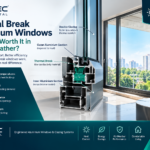
uPVC is a poor conductor of heat, which helps reduce heat transfer through the frame. Standard aluminium conducts heat more readily. However, modern aluminium systems can use thermal-break technology, which separates the inner and outer aluminium sections with an insulating strip. So if you compare standard aluminium with standard uPVC, uPVC may have an insulation advantage. If you compare a well-engineered thermal-break aluminium system with suitable glazing, the gap becomes much smaller. Read more in our guide to thermal break aluminium windows.
The key question: do not ask only “Is aluminium good for hot weather?” Ask what profile, glass and thermal-performance specification is being used.
Which is stronger, and better for large windows?
Aluminium combines low weight with high structural strength, which suits large glass areas, slim frames and high wind loads. That is why it is common in large living-room windows, wide sliding doors, big balconies, corner glazing, floor-to-ceiling windows, modern villas, commercial spaces and high-rises. uPVC can also be used for many large residential windows, but suitability depends on the profile system, reinforcement, dimensions and hardware.
Imagine a living room with a 10-foot-wide opening onto a balcony. You want maximum light, an unobstructed view, slim frames and smooth operation. This is where aluminium becomes particularly attractive. For very large openings, the engineering of the complete window system matters more than the names “aluminium” or “uPVC”.
Which looks better?
This is subjective, but the two materials create different visual possibilities. Aluminium suits minimalist architecture, contemporary homes, large glass surfaces and slim-frame designs, and its slimmer profile can make a facade look cleaner. uPVC is available in different colours, configurations and styles and works well in conventional as well as modern homes. If you want maximum glass and a very slim architectural look, aluminium may have the advantage. If your priority is insulation and practical residential performance, uPVC can be a strong option.
Which is more energy efficient?
This is one of the most misunderstood parts of the comparison. uPVC frames offer good insulation because the material itself conducts little heat. Aluminium conducts more, but thermal-break systems are designed to reduce heat transfer through the frame. And a window is much more than its frame: glass type, single or double glazing, Low-E or solar-control coatings, air gap, thermal break, seals and installation all affect the result.
Typical U-values for aluminium windows (lower is better):
| Aluminium window type | Typical U-value (W/m²·K) |
|---|---|
| Regular aluminium window | 5.5-6.5 |
| Thermal break window (single glass) | 2.5-3.5 |
| Thermal break + double glazing | 1.2-1.8 |
The thermal break alone reduces heat transfer through the window by 50-60%. Combined with double glazing, the reduction is 75-80% compared with standard windows. Comparing only the frame material gives an incomplete picture.
Which is better for noise reduction?
If you live near a busy road, a railway line, a commercial area or construction, noise may be your biggest concern. Both aluminium and uPVC windows can contribute to acoustic comfort, but the glass and sealing system are extremely important. Instead of asking whether a window is “soundproof”, ask what acoustic performance the complete window and glass combination can achieve. See noise reduction windows for what actually keeps outside noise out.
Which is easier to maintain, and which lasts longer?
Both are low-maintenance compared with wood. Aluminium care means cleaning the frame and drainage channels, keeping tracks free of dirt, and checking hardware and seals. uPVC care is similar: cleaning the frame, tracks and drainage points, and checking seals and hardware. Low maintenance does not mean zero maintenance, whichever material you choose.
Durability is not decided by the frame material alone. A high-quality aluminium window can perform for many years, but its service life depends on profile quality, surface finish, hardware, glass, sealing, manufacturing precision, installation, exposure and upkeep. The same is true of uPVC, and a poorly made or badly installed window can develop problems in either material. That is why it is better to compare complete window systems than raw materials.
Which is more affordable?
Standard uPVC systems are often more economical upfront in residential projects. Premium aluminium systems can cost more, especially with slimmer profiles, larger glass areas, premium hardware or thermal break. But the price per square foot alone can mislead: window size, profile system, glass, hardware, number of panels, finish, mesh, installation, quantity and customisation all change the final cost.
For reference, these are Dortec’s indicative prices for aluminium systems (they depend on size, glass, hardware and site conditions):
| System | Indicative price per sq ft |
|---|---|
| Regular aluminium sliding | ₹700-900 |
| Thermal break sliding | ₹1,000-1,500 |
| Regular casement | ₹900-1,100 |
| Thermal break casement | ₹1,300-1,900 |
When you compare aluminium and uPVC prices, always ask for a complete specification, not just the headline rate. Our aluminium windows price guide explains what drives the cost.
Which is better for different types of homes?
Apartments
The deciding factors are the available opening size, road and neighbour noise, heat exposure, space, budget and maintenance. Both materials can work well.
Luxury villas
Aluminium is particularly attractive where the design calls for large glass areas, slim profiles, sliding doors, minimalist elevations and indoor-outdoor connection.
Traditional residential homes
uPVC can suit homeowners who prioritise insulation, low maintenance, practicality and a cost-conscious specification.
Modern architectural homes
Aluminium is often a strong contender for large openings, slim sightlines, contemporary elevations and expansive glazing.
Architects and interior designers
The decision should go beyond material. Consider the opening dimensions, glass specification, profile, hardware, performance requirements and architectural appearance together.
Aluminium vs uPVC in Kolkata and eastern India
Homes in eastern India deal with humidity, monsoon rain, hot summers, urban dust and noise, and many areas are cyclone-prone. Do not choose a window just because someone says “aluminium is better” or “uPVC is better”. Think about where the window will be installed and what you need from it:
- A bedroom facing a busy road: acoustic glazing, good seals, proper installation and reliable hardware. See aluminium windows in Kolkata.
- A large living-room opening: structural strength, slim profiles, the right glass specification and smooth operation.
- A west-facing window: solar-control glazing, thermal performance and shading where appropriate.
- A balcony exposed to heavy rain: water management, drainage, sealing and correct installation. Read our monsoon-proof windows guide and why windows leak during the monsoon.
Aluminium or uPVC: which should you choose?
A simple way to decide is to start with your priorities.
Consider uPVC if your priorities are:
- Thermal insulation
- Low maintenance
- Noise reduction
- Practical, smaller residential applications
- A cost-conscious specification
Consider aluminium if your priorities are:
- Slim profiles and large glass areas
- Large openings
- Contemporary architecture and minimalist looks
- Strong frame construction
- Premium sliding and opening systems
It does not have to be an either-or decision for the whole house. The best window is the one whose specification matches the needs of that particular opening.
Questions to ask before you compare two quotations
Suppose you receive one quotation for aluminium and another for uPVC. You still do not know which gives better value until you ask:
- Profile: which profile or system is being used?
- Glass: what type and thickness of glass is included?
- Hardware: which handles, locks, rollers and accessories are being used?
- Sealing: what gaskets and weather seals are included?
- Performance: what air, water and structural performance specifications apply?
- Installation: who installs the windows, and by what method?
- Warranty: what is covered, and for how long?
For reference, Dortec gives a fully transferable 10-year warranty on profile structural integrity and colourfastness, and a 1-year warranty on moving hardware and glass.
Aluminium vs uPVC windows: the bottom line
uPVC windows can be a practical choice when insulation, low maintenance and everyday residential comfort matter most, at a lower price. Aluminium windows can be a particularly strong choice when you want slim profiles, larger glass areas, structural strength and a contemporary look. Do not choose by material or by the lowest quotation alone. Choose by the complete system, the opening, the climate, the glass, the hardware, the installation quality and how you want your home to look and perform.
FAQ
Is aluminium or uPVC better for Indian homes?
Neither is better for every home. uPVC suits homeowners who prioritise insulation, low maintenance and cost. Aluminium suits large openings, slim frames, contemporary design and strong structural performance.
Is aluminium better than uPVC for hot climates?
Standard aluminium conducts more heat than uPVC. Thermal-break aluminium, with an insulating strip between the inner and outer frame and suitable glazing, narrows the gap considerably. The glass specification matters as much as the frame.
Which is cheaper, aluminium or uPVC windows?
Standard uPVC systems are often more economical upfront. Aluminium can cost more, particularly with thermal break, slim profiles, large glass areas or premium hardware. Compare complete specifications, not just the price per square foot.
Which is better for large windows and balconies?
Aluminium is usually the more natural choice for large openings, because its strength allows slim frames to carry large glass areas. uPVC can work for many large residential windows, depending on the profile system and reinforcement.
Which is better for noise reduction?
Both can reduce noise. The glass and sealing system matter most, so ask for the acoustic performance of the complete window and glass combination.
Which is better for Kolkata’s humid and rainy climate?
Either can work if the complete system is well specified and installed. Pay particular attention to drainage, sealing, hardware and frame-to-wall joints, which decide how well a window handles heavy monsoon rain.
Choosing the right windows for your home?
Every home has different requirements, from large living-room openings to bedrooms facing busy roads. The right combination of window system, glass, hardware and installation makes a real difference. Explore Dortec’s aluminium sliding windows or get in touch with our team to find a system that suits your project.